
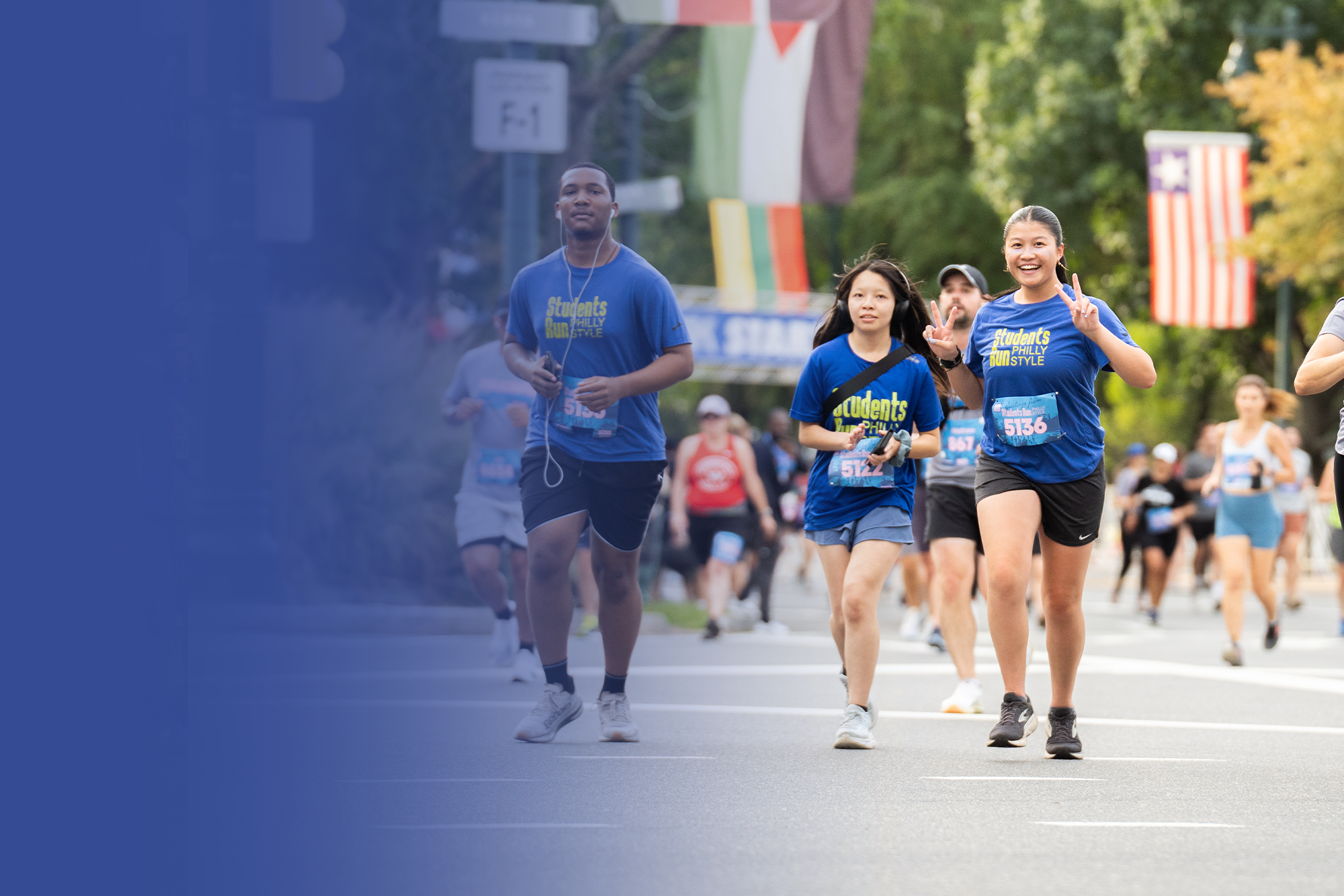
Run for Philly's Future
Our Program
Learn more about our running mentorship program for the next generation of athletes!
Mentorship + Achievement = Impact
Mentorship + Achievement = Impact
Students Run Philly Style empowers students to build confidence, and set and achieve goals.
We pair volunteer mentors with teams of students in grades 6-12 to inspire them to push themselves further than they ever imagined. Their goal: the completion of a full or a half-marathon. The courage and effort required, the unfailing support of a caring mentor, and the thrill of its ultimate achievement result in a student who knows anything is possible.
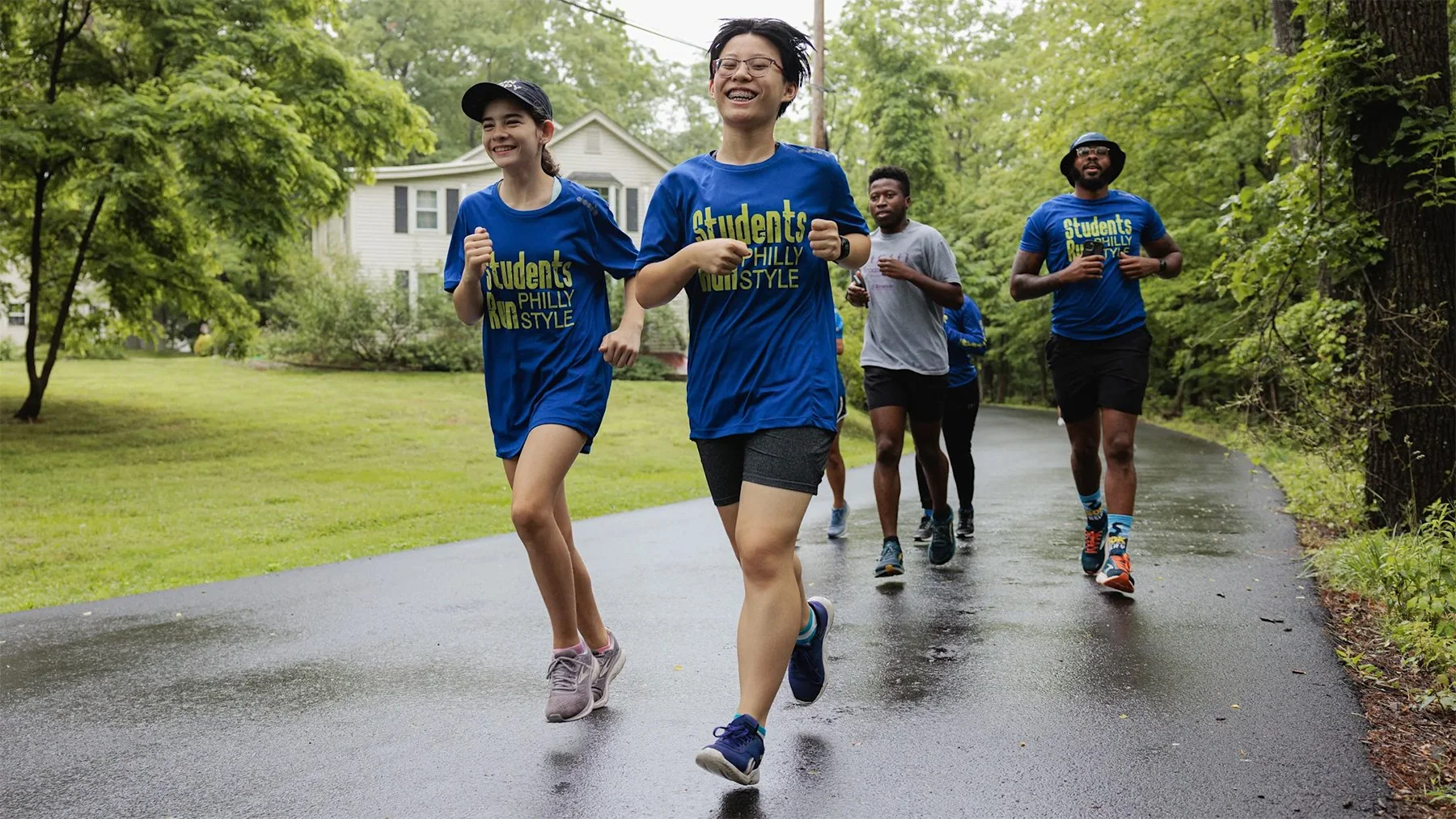
Become A
Student Runner
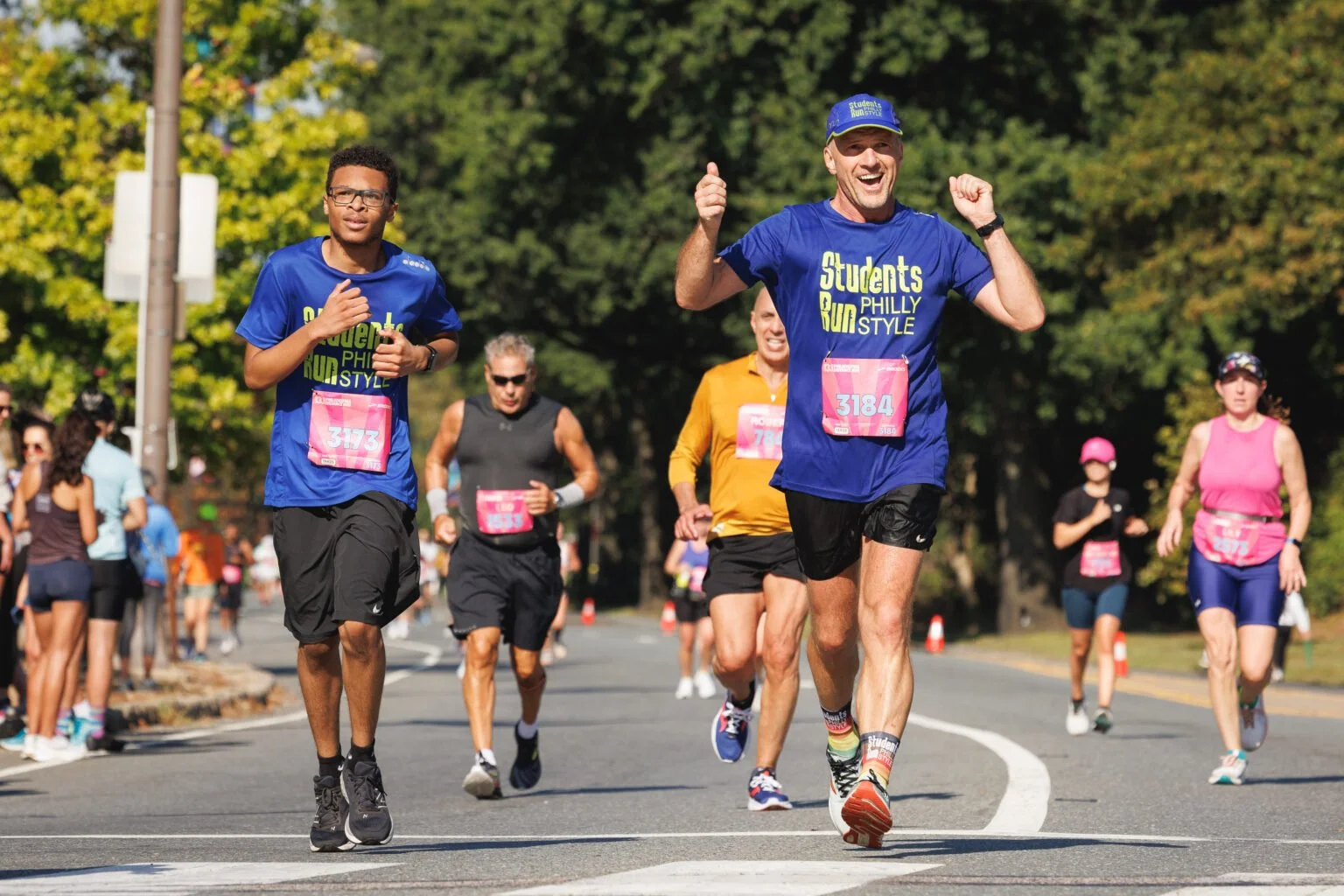
Become A
Volunteer Mentor
Our Race Partners




Impact & Outcomes
Students and mentors train up to 10 hours weekly from March through November to run the Philadelphia Half or Full Marathon in November.
Here are some of the results:
Social Support
Students with increased support from mentors were 5x more likely to report increased self-worth. 92% of students reported that their SRPS mentors cares about their feelings, and 85% reported that SRPS mentors are a source of comfort.
Health
Evaluations suggest SRPS may help students build a broader and more adaptable toolkit for managing stress and adversity. Nearly half of students reported increased use of multiple coping strategies during the season, and 89% of students reported at the end of the season that they have the skills they need to live an active lifestyle
Goal Setting
Students who reported an increased sense of program identity were 3x more likely to report increased future aspirations. 76% of students reported they maintained or increased self-regulation from pre- to post-season, and 73% of students maintained or increased their future aspirations.
Fostering Resilience
Long-distance running is an exercise in endurance. Paired with a supportive mentor who trains alongside them, students prove they can continue to push forward regardless of how far away the finish line may seem. Endurance is habit forming, and as students learn to set and accomplish goals physically, these skills transfer to problem-solving elsewhere.
Much like the road to success, long-distance running is not a straight line. There are steps forward and setbacks that arise. To keep moving forward, students must be patient, dedicated, and essentially, resilient. These learned behaviors teach students that success in a race does not depend on being the fastest, but rather on crossing the finish line. By applying these learned behaviors, students learn the value of showing up and troubleshooting challenges.
SRPS youth learn that the road to success is not always clear, but with persistence and determination, they can create a road to achievement that is ultimately their own.